Roborock has been on a tear lately, and the Saros 20 (released in the US on March 23, 2026) is the new top of the lineup. It replaces last year’s Saros 10R as the company’s “we threw everything at it” model. After spending some time with the spec sheet, third-party teardowns, and the early independent reviews, here’s where it actually moves the needle and where it doesn’t.
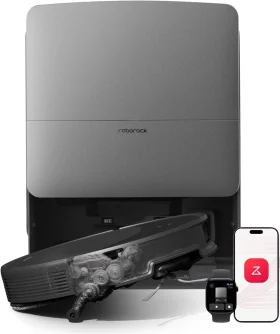

The headline number: 36,000 Pa
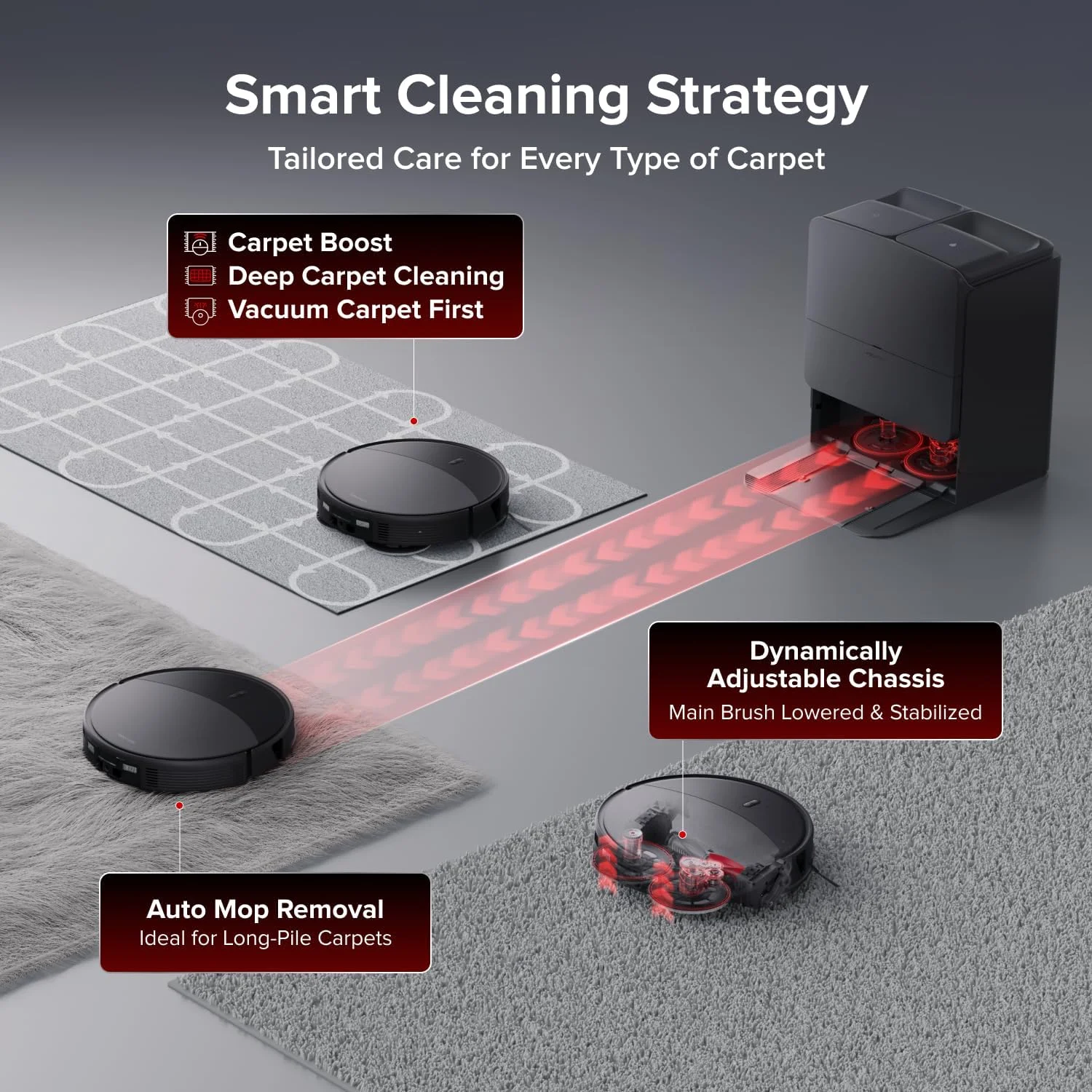
Suction-power claims get silly fast (we’ve gone from 2,500 Pa on the S7 to 6,000 on the S8 Pro Ultra to 22,000 on the Saros 10R, and now 36,000 here), and most of it doesn’t translate to a difference you’d notice. That said, 36,000 Pa is the highest published figure on any major robot vacuum right now, and unlike a lot of these numbers it is showing up in independent testing. Vacuum Wars measured the Saros 20 pulling out 89% of embedded sand from carpet in their deep-clean test and 88% of flattened pet hair, both of which put it at or near the top of their charts.
If you’ve got a house with mid-pile rugs and a shedding dog, this is genuinely the part of the spec sheet that matters. Hard floors don’t need 36,000 Pa, but rugs do.
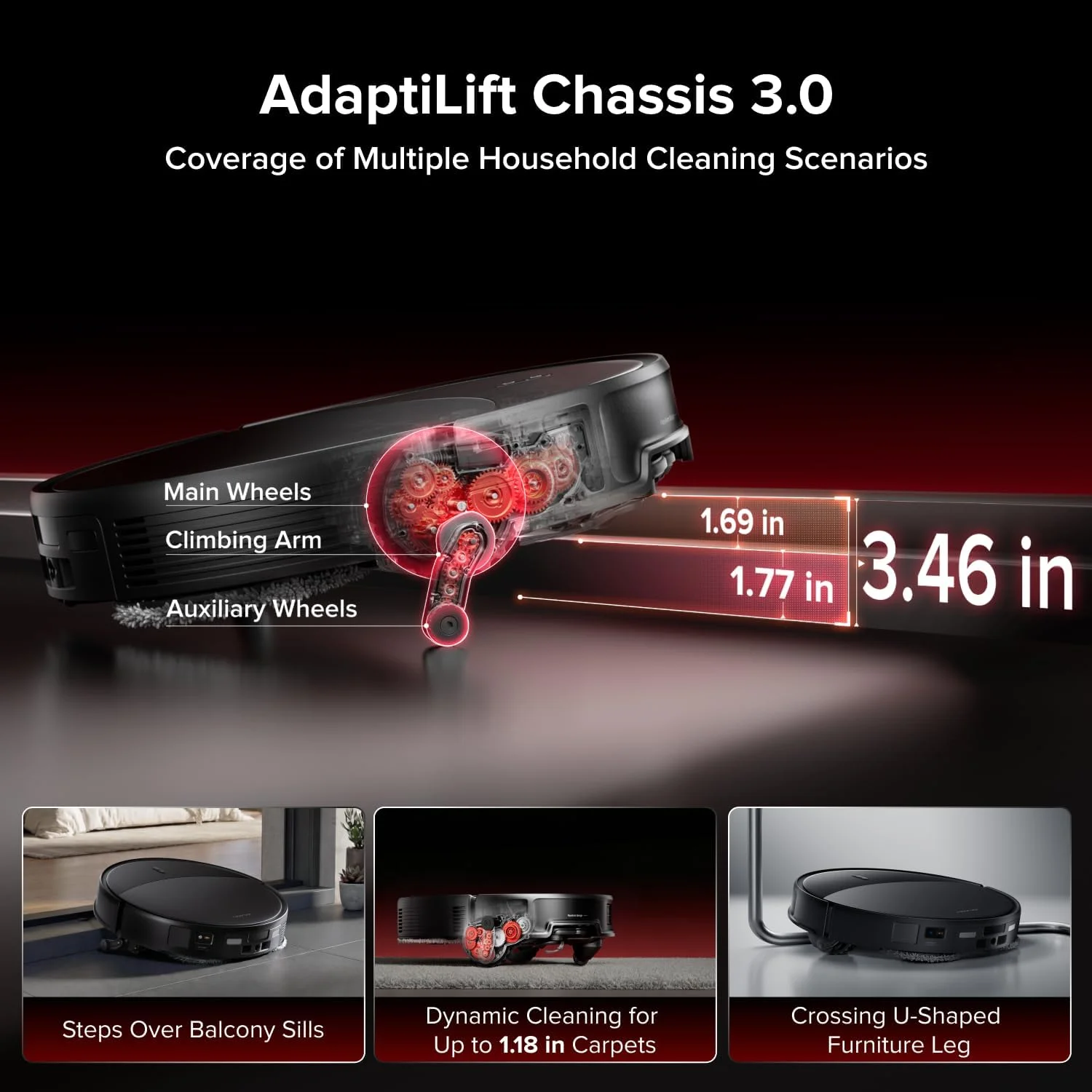
AdaptiLift Chassis 3.0 - actually a big deal
This is the upgrade I’d point to before the suction number. The Saros 10R could climb thresholds up to about 4 cm (~1.6 in). The Saros 20 climbs 3.46 inches (8.8 cm) of double-layer threshold, which in practice means it can roll over the kind of two-step sliding-door tracks, raised tile transitions, and pet gates that have historically been hard stops for robot vacuums.
The chassis raises and lowers dynamically as it approaches an obstacle, instead of relying on momentum to vault over it. This is the kind of thing that doesn’t sound exciting in marketing copy but is the difference between “this vacuum cleans my whole house” and “this vacuum cleans most of my house and then gets stuck behind the bathroom door.”
Ultra-slim body: 3.13 inches tall
Roborock dropped the spinning LiDAR turret that’s lived on top of every Roborock flagship for years. Navigation moves to StarSight Autonomous System 2.0, which uses solid-state LiDAR and a front-facing RGB camera. The practical result: the body is just 79.8 mm (3.13 in) tall, so it gets under sofas, bed frames, and TV consoles that a turreted robot bonks into.
If you’ve ever pulled a robot out from under a couch covered in three months of compacted dust, you’ll understand why this matters more than another 1,000 Pa.

The trade-off is that you’re now relying on a camera for obstacle ID. Roborock claims 300+ obstacle types recognized, with better lateral avoidance than the 10R. Early reviewers report it dodges cables and pet bowls reliably; whether it’ll still be reliable in dim rooms is something we’ll be watching.
The RockDock and 212°F mop wash
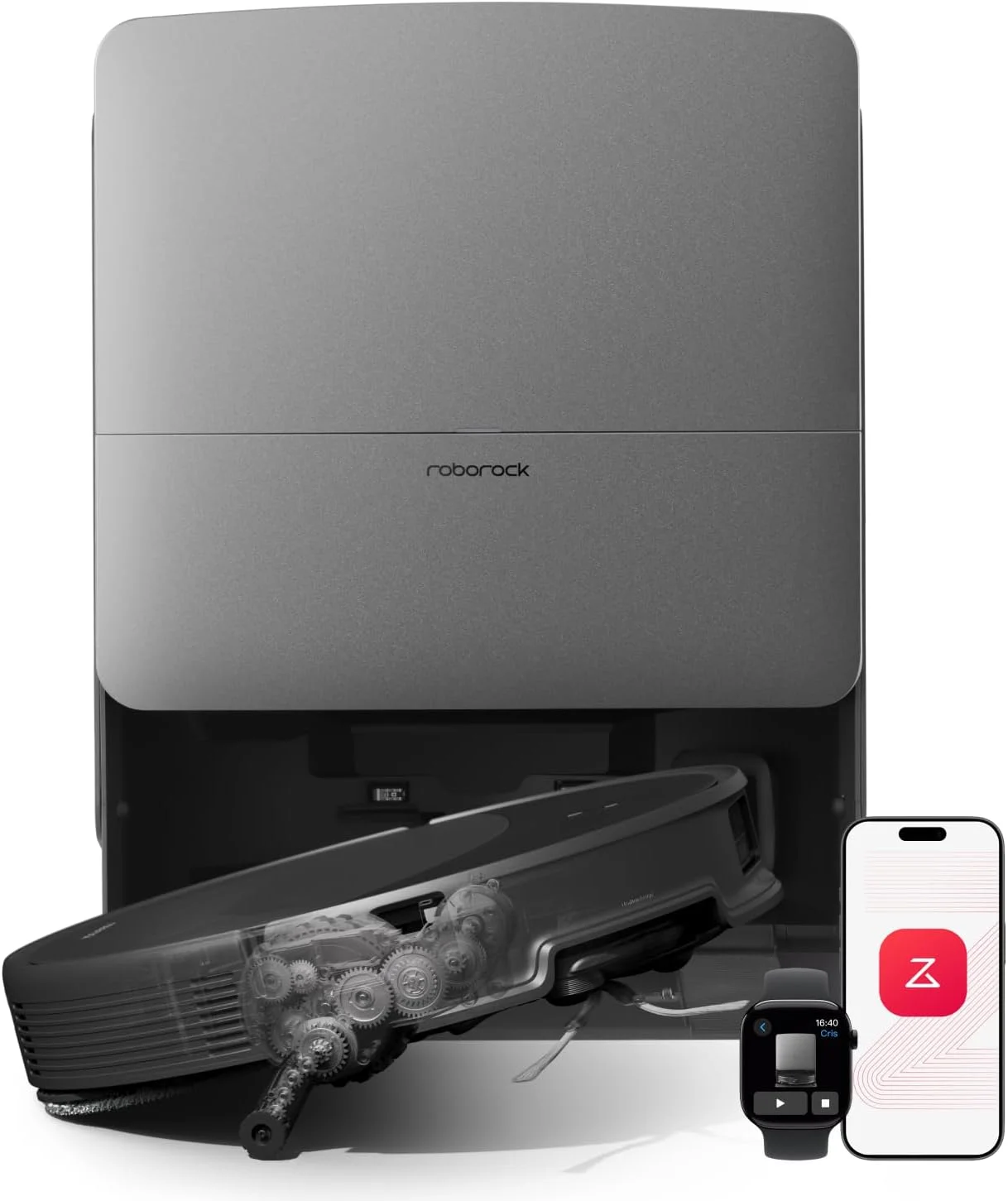
The dock has been redesigned as a single-piece cleaning tray, and the headline change is mop washing at 212°F (100°C) — up from the 60-80°C range on the 10R. That’s not a small bump. Boiling-temperature water actually sanitizes the pads instead of just rinsing them, which is the difference between mop pads that smell fine after a month and mop pads you have to throw out (or, if you’d rather just have spares on hand, these replacements fit a wide range of Roborock models).
Other dock features worth noting:
- 131°F hot-air drying after each wash, so the pads don’t sit damp.
- Dust bag drying (new) - reduces smell from the auto-empty bag in humid climates.
- Auto dust emptying for up to 65 days before you swap the bag.
- Self-cleaning of the wash tray itself, which historically has been the thing that gets gross and gets ignored.
If you’ve been put off Roborock’s older models because the dock turned into a science experiment after a few weeks, the Saros 20’s dock is the strongest answer to that yet.
Zero-tangle for pet hair
The dual anti-tangle system on the main brush and side brush is something Roborock has iterated on for a few generations now, and on the Saros 20 it’s reportedly the cleanest implementation yet — you can run it for weeks in a long-hair-dog household before you have to manually pull anything off the roller. This was a real annoyance on the S7-era models (cut the hair off, every. single. week.), and it’s the kind of quiet upgrade that doesn’t show up in marketing but adds up.
FlexiArm: the corner-and-edge problem
Robot vacuums have historically been bad at corners because they’re round and corners are square. FlexiArm is a mechanism that extends the side brush and mop sideways into corners and along baseboards, instead of just spinning in place hoping a bristle lands in the right spot. You can also tag curtains in the app and the robot will mop behind the curtain rather than just along its drape line.
This is a small thing but if you’ve ever looked at a finished cleaning map and wondered why there’s a 2-inch strip of unmopped floor along every wall, FlexiArm is the answer.
What’s new in the app: SmartPlan 3.0
The SmartPlan feature now learns over time which rooms get dirty fastest, which times of day you’d rather it not run, and which spots need a second pass. Standard machine-learning-over-time stuff, and in practice it means after a couple weeks you can just tap “Smart Clean” and trust it instead of micromanaging room-by-room schedules. The built-in RGB camera also doubles as a pet cam from the app.
Where it falls short
- The price. $1,599.99 MSRP is a lot of robot. The Saros 10R is still on the market for a few hundred less, and if you don’t have problem thresholds or shedding pets, the gap in real-world performance is smaller than the gap in spec-sheet performance.
- No top turret means you’re trusting the camera. Solid-state LiDAR has come a long way, but if you have a layout with lots of glass furniture or low-contrast obstacles, the older spinning-laser robots still have some edge cases they handle better.
- It’s big at the dock. The new RockDock is a substantial piece of furniture. Plan a spot for it.
Is it worth $1,599?
If you have any of the following, yes:
- A house with thresholds or transitions that have stymied previous robots
- Mid-pile rugs you want actually deep-cleaned, not just surface-vacuumed
- Shedding pets and you’re tired of manually de-hairing the roller weekly
- Furniture you’ve previously had to move to let the robot under
If you have hard floors throughout, no pets, and one-story layout with no thresholds, you’ll be perfectly happy with the Saros 10R for a few hundred less.
But the Saros 20 is the first robot vacuum I’ve looked at in a while where the upgrades aren’t just iteration — the threshold-climbing, the ultra-slim body, and the boiling-water mop wash are all things that solve actual long-standing problems with this category. If you’re going to buy a robot vacuum at this price point, this is the one that earns it.